FIELDNOTES·5 SEPTEMBER 2025·3 MIN READ
AI: Friend, Foe, or the Future Knocking
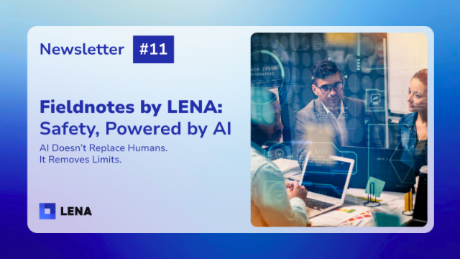
AI doesn’t replace humans. It removes limits.
 Lena Software editorial team
Artificial intelligence is making its presence felt in every field today. AI has brought about striking changes and transformations in the workforce and continues to do so. As it is used in many fields, companies are also integrating AI to increase efficiency and produce innovative solutions.
According to IBM’s Global AI Adoption Index, 42% of companies are actively using AI, while 40% are in the testing phase. Additionally, 62% of CFOs predict that AI will be the most impactful factor over the next three years. So, what kind of results does this integration lead to? Is AI a competitor in the workforce, or just an assistant?
AI: friend or foe? Let’s talk about it
AI feels different because it’s a tool that thinks. That sense of autonomy triggers our instinctive fear of losing control. Add to that the headlines: job cuts, restructuring, and automation on the rise. It’s no wonder conversations around AI often start with: will artificial intelligence take our jobs?
Recent headlines from companies are also not helping AI’s case. Coinbase CEO Brian Armstrong openly stated that he has parted ways with engineers who fail to integrate AI into their workflows. Duolingo announced a reduction in contracted translator positions after doubling down on AI-powered solutions. For many, this felt like confirmation that humans are being replaced. But is the full picture being told? We don’t think so.
Lessons from the industrial revolution: development instead of fear
Yes, AI is automating repetitive, time-consuming tasks. But this doesn’t equal job destruction; it means job evolution. AI makes people more valuable even in the most automatable jobs by increasing productivity, allowing employees to focus on creative and strategic tasks.
Think back to the industrial revolution: machines replaced manual labour in many industries, yet new sectors and careers emerged. AI is on a similar path. According to Veritone’s Q1 2025 report, AI-related job openings in the U.S. have skyrocketed to 35,445, marking a 25% increase over the previous year. These roles range from prompt engineers and AI ethicists to data strategists and machine learning specialists, positions that didn’t even exist a decade ago.
- Boosting productivity, so employees can focus on creative and strategic work.
- Opening new sectors, from AI governance to ethical frameworks.
- Levelling up existing jobs, turning routine tasks into high-value contributions.
The truth? AI doesn’t eliminate humans; it removes limits. The real question isn’t whether AI will take your job, but whether you’ll embrace the chance to reinvent your role.
AI in the field: from sci-fi myths to real-world impact
Five years ago, the narrative was straightforward: AI would dominate digital workspaces while field operations would remain untouched, purely physical and manual. We were wrong.
Today, everything is integrated. AI isn’t taking over the world like a sci-fi movie; instead, it’s quietly transforming how physical and digital workplaces connect. From construction sites to maintenance teams, AI now plays an unexpected but essential role in improving safety, productivity, and resilience.
Take Lena Vision, our AI-powered surveillance solution, which detects risks in real time, or fatigue trackers that prevent accidents before they happen. Predictive resilience systems powered by AI ensure teams and assets are always one step ahead. Even internal communication tools now leverage AI to eliminate miscommunication between on-site and remote teams.
Field inefficiencies are being tackled by AI
Not all delays scream for attention; some whisper. A missing part, a form that needs retyping, a five-minute wait for a sign-off. These micro-delays don’t make it into reports, yet they drain hours, kill productivity, and frustrate both teams and customers.
Today, field operations and AI are no longer separate worlds. From predictive maintenance to fatigue detection and proactive alerts, technology is reshaping the way field teams work, not by replacing humans, but by giving them clarity, speed, and flow.
LENA’S TAKE
At Lena, we see AI as the ultimate partner. Fear of losing control or being replaced is natural, especially when change feels this big. But history tells us a different story: every technological leap, from the industrial revolution to the digital age, created more opportunities than it removed.
What makes AI powerful isn’t the algorithms, it’s how we use it. When applied thoughtfully, AI doesn’t erase jobs; it eliminates friction. It eliminates repetitive, time-draining tasks, providing teams with what they truly need: clarity, speed, and the time to focus on meaningful work.
The future isn’t man vs. machine. It’s man with machine, building better workflows, safer environments, and stronger businesses.
Fieldnotes lands monthly. Subscribe to get the next issue as it publishes.
Subscribe on LinkedIn